
01 / ESL EXPLAINED
What is an electronic shelf label?
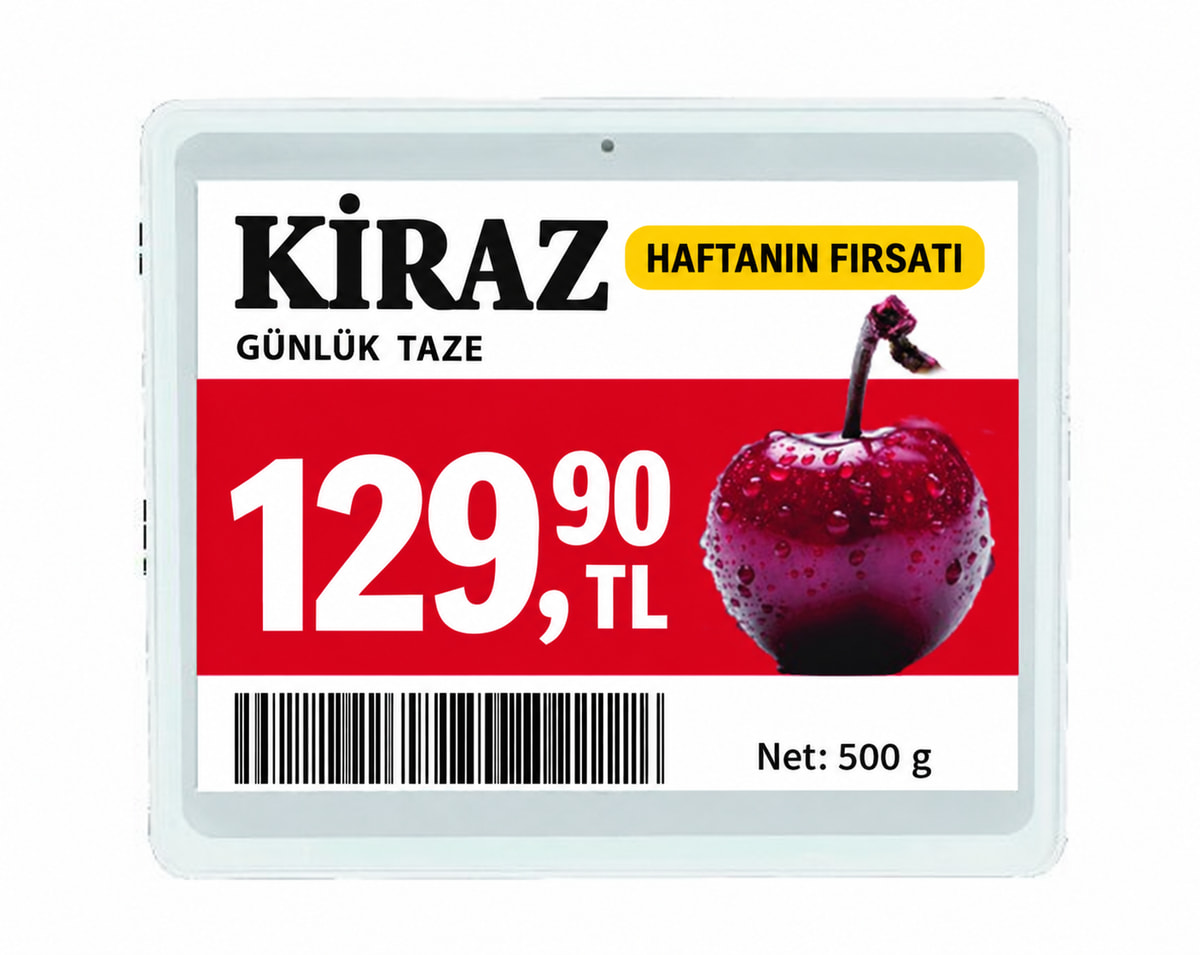
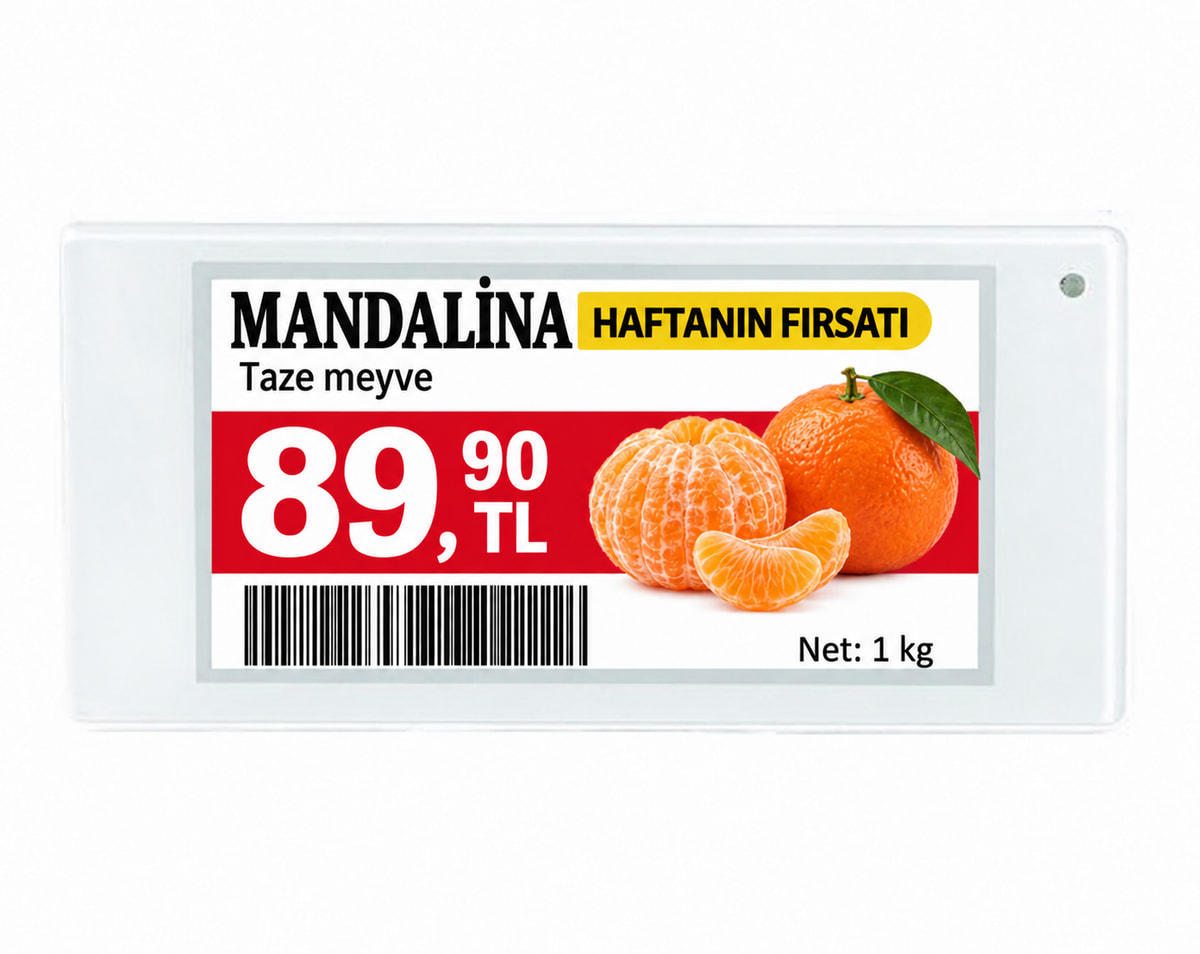
An electronic shelf label (ESL) shows product names, prices and product information on an e-paper display. Labels, communications infrastructure and management software work together.
How does a price reach the shelf?
The project first identifies the system that owns the product data. In the management software, each product is paired with a label, a layout is selected, and the update is delivered through the communications infrastructure. Layouts may include names, prices, units and barcodes, depending on the application.
Which components should be selected together?
- Labels: screen size, resolution, colors and operating temperature.
- Base stations: compatibility with the selected label family and the site.
- Mounting: shelf profiles, clips, stands or a specific installation.
- Software and data flow: product pairing, layouts and update workflows.
Look beyond screen size
Two labels with the same screen size can have different housing dimensions, resolutions or battery specifications. Consider both the information to display and the available shelf space. Freezers require a suitable low-temperature series. Battery-life claims must be considered alongside update frequency and operating conditions.
Start with a representative pilot
For initial scoping, collect the store count, number of products to label, shelf photographs and details of the existing inventory or pricing system. Include challenging locations in the pilot. Evaluate readability, update workflows, communications coverage and staff use on site.
YOUR NEXT STEP
Put knowledge into practice.
Gather your initial project details. Let’s assess product selection and implementation together.
Tell us about your projectExplore the product catalogue. This guide supports initial planning; implementation conditions are verified for each project.